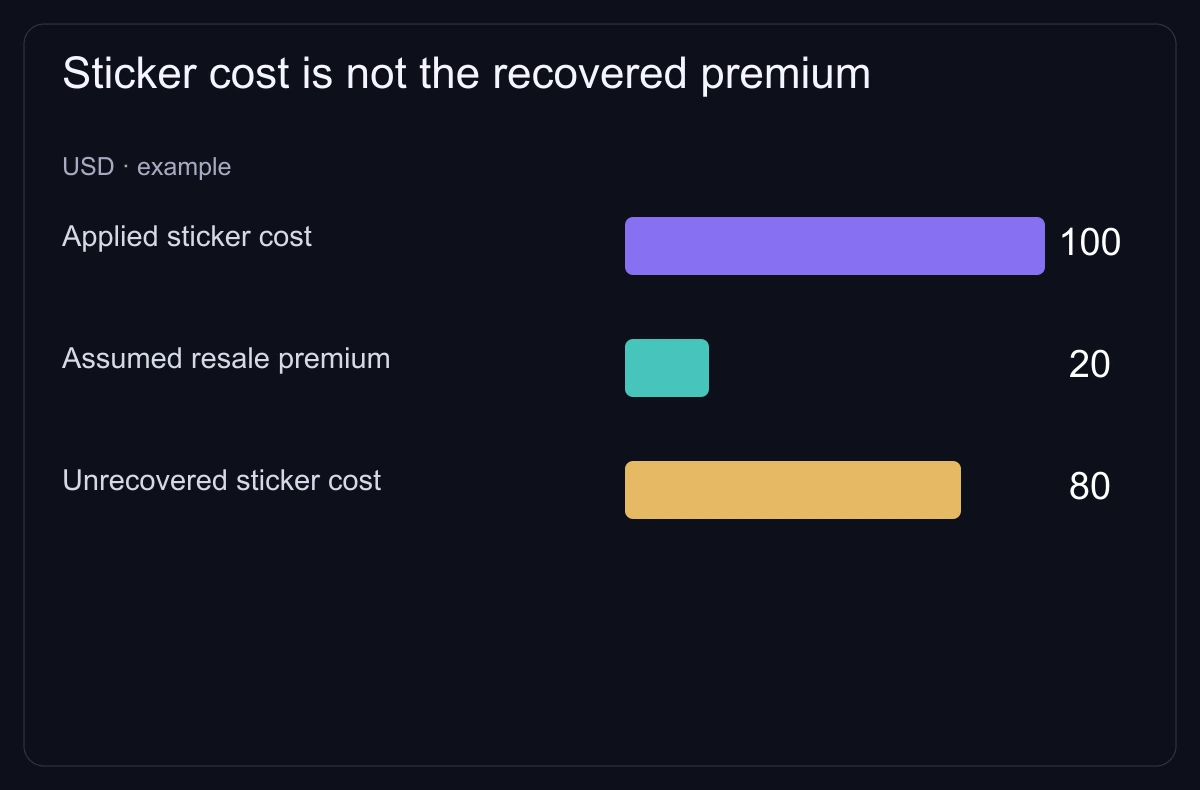
A craft sells when a buyer wants that exact skin, sticker set and placement at your price. Applied stickers can’t be taken off and resold, so a craft is worth the plain skin plus whatever premium buyers pay for the finished design. Start from the plain skin’s price, then find out what premium similar crafts have actually sold for.
For your own loadout, paying for a design you like is a fine goal. For resale, buying an existing craft can be cheaper than paying full sticker cost, but only if its condition and layout suit the next buyer.
Inspect the design the way other players see it
Check first-person view and movement, not just a close-up. See which stickers your hands or the model hide, whether the theme still reads, and how holo effects look in normal lighting. A coherent cheap design can be easier to explain to a buyer than an expensive mix.
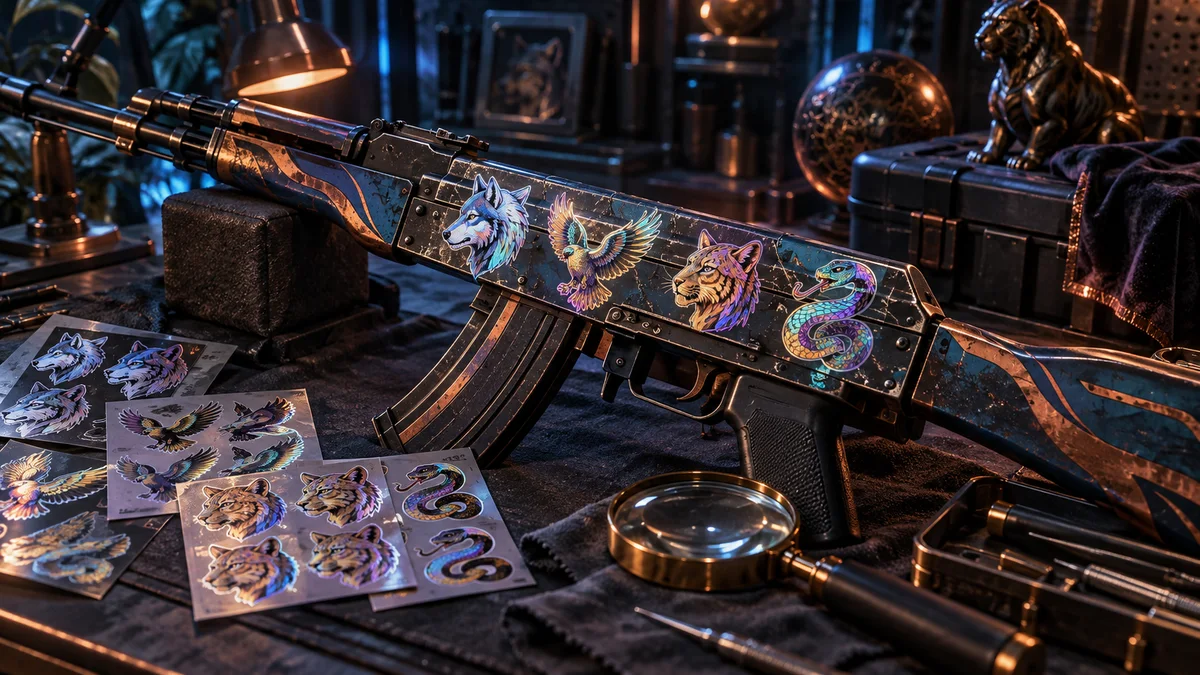
Steam Support says you can put up to five stickers on any weapon and move or rotate them before applying. After that they can’t be moved, scraping is permanent, and removing a sticker destroys it. A Sticker Slab is a separate charm item, covered in the Major items guide.
How to calculate SP%
Craft premium = craft price − price of the same plain skin
SP% = craft premium ÷ price of the same stickers unapplied × 100
Match wear, float and other base-skin premiums first, so a float premium isn’t counted as a sticker premium. Take sticker prices from the same marketplace, currency and date.
Example: the plain skin costs $30, four stickers cost $20 each, and a finished craft sells for $42. The premium is $12, so SP% = $12 ÷ $80 × 100 = 15%. Making that craft yourself costs $110. Selling it for $42 with an 8% fee returns $38.64, which is $71.36 less than you spent.
Why two crafts with the same stickers differ
| Attribute | Inspect | Effect on price |
|---|---|---|
| Placement | Rotation, overlap, visibility, spacing | Same sticker names can make very different layouts. |
| Scraping | Every applied sticker separately | A clean comparison overprices a scraped craft. |
| Base skin | Exact wear, float and demand | Part of the price difference belongs to the skin. |
| Buyers | Completed sales of similar crafts and real buy orders | A rare design can take a long time to sell. |
Don’t apply one recovery percentage to all modern stickers or one multiplier to all Katowice 2014 crafts. Rare vintage crafts need their own comparisons, and an unsold trophy listing is not a sale.
Add up the cost in the craft calculator
- Open the sticker craft calculator and search for the base skin.
- Add stickers to the five slots. The ×4 button copies the first sticker into slots two to four; the fifth stays free.
- Read the total as the cost to build the craft at our latest prices. A sticker without a price adds $0, so fill the gaps before you budget.
- Compare that total with ready-made crafts you’ve inspected, and work out your net proceeds separately.
The calculator adds up prices; it doesn’t preview placement, check scrapes or estimate resale. Here is how we calculate prices.
Sell with evidence
Give buyers an inspect link, first-person screenshots, the exact float, every sticker name and an honest scrape description. Back your price with comparable crafts and say which part is your own judgment. A buyer who only wants the base skin will pay the base price.