
Start with three throws on your main map: one smoke that blocks a dangerous angle, one flash a teammate can swing behind and one molotov for a close hiding spot. Then practice what happens after the throw. A lineup that lands perfectly but fades before anyone moves has failed.
What each grenade does for you
- Smoke: blocks sightlines for a while. It hides movement but does not make the space inside or behind it safe.
- Flash: gives a teammate a fight against a blinded opponent. Call the timing and do not blind your own entry.
- Molotov or incendiary: denies ground, delays a route or forces a defender out of cover. Since 16 July 2025 incendiary fire spreads faster (Valve notes).
- HE: damages a known or likely position and can briefly open a smoke. Thrown at an empty lane out of habit, it is wasted money.
- Decoy: a distraction. In a beginner execute it rarely replaces a smoke or flash.
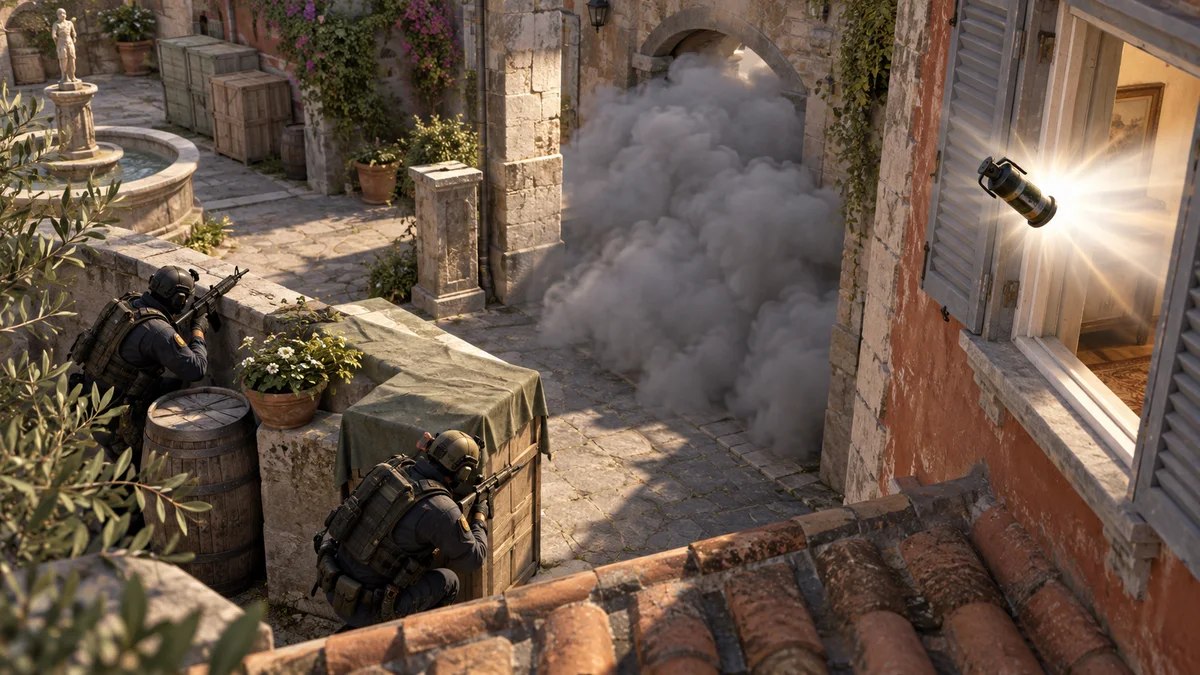
Valve built CS2 smokes as volumetric clouds that fill the space around them; bullets and HE grenades can push smoke to briefly clear sightlines (CS2 overview). A smoke is not a wall, so cross it quickly. Smoke also puts out molotov fire: Valve's 26 August 2025 notes fixed overlapping smokes doing it too early.
Test a throw instead of collecting screenshots
- Open the map in Practice. Since 25 April 2024 a line-up reticle appears shortly after you pull the pin, and you can set its delay for each grenade type (Valve).
- Write down your starting spot, aim point, stance, movement and the button you throw with. Standing, moving and jumping throws are different recipes.
- Throw from a fresh approach five times and check the coverage from the enemy's angle, including edges and gaps.
- Repeat while a teammate makes the planned crossing or entry, and agree when they should move.
Valve's official map guides cover Active Duty maps, and in Competitive you can use a limited guide during the first five rounds of each half (Guns, Guides, and Games). Since 30 September 2026 you can also hold a grenade attack button during freeze time to see the grenade crosshair for an instant smoke (notes). Old jump-throw binds are out: since 19 August 2024, binds that combine commands such as jump and attack are ignored by default (notes).
Two small coordinated plays
Entering past an AWP: name the angle, smoke it and wait for the smoke to cover it. The entry clears the close position the smoke does not cover, and the second player stays ready to trade. A flash thrown after the entry is already exposed cannot repair the timing.
Retaking with two players: pick one route, call “flash on your count” and keep your weapon up while your teammate moves. Smoke the other crossfire if you need to. A smoke on the bomb can buy a defuse, but opponents can shoot or throw an HE through it, so assign someone to cover the defuser.
Judge usefulness, not grenade count
For each planned throw, note whether it landed, whether someone used the timing and whether the angle was actually blocked. If a smoke landed five times out of five but the team followed only twice, placement is not your main problem; your next drill is coordination.
Keep one grenade for a likely late job instead of spending everything at first contact: a defender delaying the final hit or an attacker protecting the plant. Unused utility in a lost round is not good saving, though.
Use buy planning to fund the throws, banana for timing examples and demos to see whether the teammate could follow.