
Training maps only matter if they transfer. The point of a CS2 warmup is not a high score on a bot range — it is walking into your first Premier duel with a calm crosshair, a spray you trust, and utility you can throw without thinking. This 2026 roadmap keeps the proven workshop maps, but wraps them in a workflow built for one thing: carrying mechanics from the practice range into real rounds.
Treat it as a framework, not a checklist. Pick one block per category, keep every session short and measurable, and let consistency — not session length — be the signal that it is working.

Rule of thumb: one map, one target metric, one clear stop condition. That beats an hour of unfocused clicking every time.
1) Aim foundation — accuracy under control
Build accuracy under predictable conditions first. Your opening KPI is not score — it is shot consistency in the first engagement, because that is the duel that quietly decides most rounds.
Aim Botz — Training by uLLeticaL
Beginner Core block ~12 min Open in Steam Workshop ↗
This is your warmup baseline after long breaks and before every ranked queue. Lock one 10–12 minute block with fixed targets and a single metric, then stop.
- Fix one routine: one map, one target count, one metric only.
- Track hit consistency, not raw score volume.
- Static targets first, then lateral movers, then mixed movers.
- If confidence drops after three blocks, cut volume and restart clean.
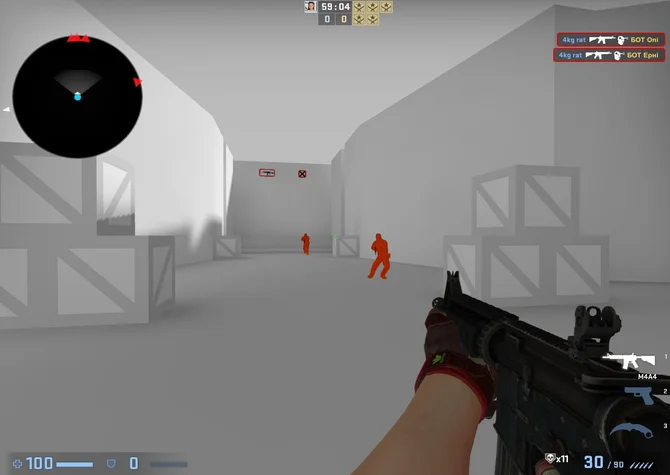
Training — Blank by Zool
Intermediate Core block ~10 min Open in Steam Workshop ↗
Add this block for peeking transitions and quick target switches once game speed climbs. The minimalist visual style helps you isolate movement habits instead of reacting to clutter.
- Small turns with stable crosshair placement.
- Short turn, quick recovery, clear timing.
- Stop at the first drop in discipline and reset the routine.
2) Recoil and spray depth
Recoil discipline is what makes your aim hold up across rifles and ranges, especially deep into a long session when focus fades.
Recoil Master — Spray Training by uLLeticaL
Advanced Control ~14 min Open in Steam Workshop ↗
Use this to stabilise burst structure. Add one weapon profile at a time and keep your metric sheet simple — recoil control comes back through repetition, not aggressive volume.
- Build in short windows: first 10 shots, then the next 10, then full rhythm.
- One rifle profile per session — don't mix the AK and M4 in the same block.
- Only move from 25m to 50m once close control is genuinely stable.

3) Utility and match simulation
Treat utility as a repeatable system: same throw, same conditions, same result-quality target. The aim is to make round-opening lineups automatic so your attention is free for timing and reads.
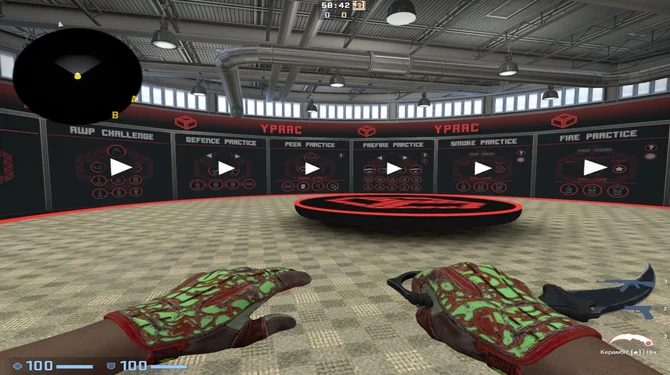
Yprac Dust2 — Smokes & Utility by Yesber
Advanced Utility ~16 min Open in Steam Workshop ↗
Drill the core smoke and flash sequences that appear in match openings until the decision disappears and only the execution remains.
- Repeat the same throw from the same spot at least five times.
- Check visual cover and lane safety after every throw.
- Cut any throw that never actually helps in your rotation.
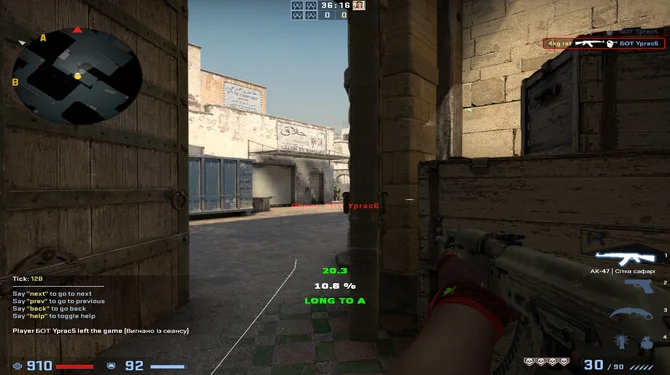
Yprac Dust2 — Prefire Sequence by Yesber
Advanced Match sim ~10 min Open in Steam Workshop ↗
Pressure-safe prefire drills for clearing common angles. Focus on entrance timing and the early decision points, not on memorising every corner at once.
- Take one lane to consistency before adding the next.
- Log misses and recoveries, not just clean clears.
- Stop after a clean session — don't overtrain into fatigue.
The 10-day training cycle
Frequency beats marathon sessions. Keep duration controlled and give every block a single main objective. Here is a template you can repeat — adjust the maps, keep the shape.
- Day 1 — Mon: Aim baseline + a light spray setup.
- Day 2 — Tue: Aim depth and one utility lane review.
- Day 3 — Wed: Prefire sequence + a short warm-up check.
- Day 4 — Thu: Rest, or technical/demo review only.
- Day 5 — Fri: Full aim + spray block at controlled volume.
- Day 6 — Sat: Match simulation, then five minutes of notes.
- Day 7 — Sun: Recovery, and pick one map for next week.
- Days 8–10: Repeat the strongest three blocks and drop whatever didn't transfer.
What usually breaks progress
- Treating an old routine as fresh without changing the metric you track.
- Chasing session length instead of consistency.
- Skipping the reset between blocks and expecting cleaner output.
- Dropping utility drills after one bad ranked game.
Where training fits in the bigger picture
Mechanics are one input; decisions and pacing are the rest. Pair this routine with a reflex check on the CS2 aim click trainer or the reaction time test, structure your week with the ranked practice routine, and once the habits stick, track whether they move your Premier rating in real rounds.
Frequently asked questions
Should I use old CS:GO workshop maps in CS2?
Only if the map is still maintained and loads cleanly in CS2. Prefer current workshop pages and replace a broken map instead of forcing an outdated routine.
How long should a CS2 warmup take?
For most players, 15–30 focused minutes beats a long, distracted session: one aim block, one recoil or utility block, then queue.
Do training maps improve Premier rating directly?
No — they build mechanics and consistency. Rating improves when those habits show up in real rounds, utility, trades and decisions.
Use this 2026 version as a framework: steady, measurable consistency scales far better than random map-hopping.