
To control recoil in CS2, learn the first five bullets of one rifle while standing still at a fixed distance, then add normal spread, movement and moving targets. If your first bullet misses because you were moving or aiming too low, memorizing the end of the magazine will not fix it.
Three reasons bullets leave the target
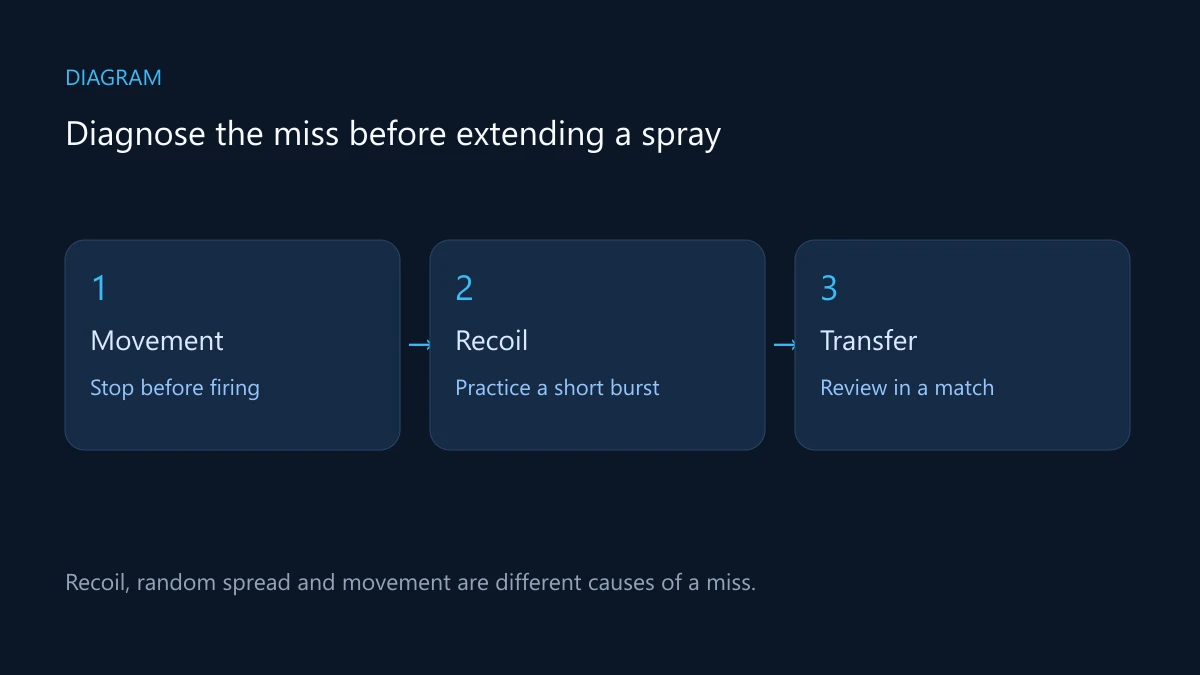
Recoil pushes the spray in a direction you can learn and pull against with the mouse. Spread and inaccuracy scatter shots around that direction, and moving makes them worse. Since 23 September 2026 the dynamic crosshair styles show your weapon's real spread and inaccuracy (Valve notes), which makes the difference visible. A moving target adds a separate tracking problem.
Compare a standing tap, a standing burst and a shot right after a strafe. Stable taps but climbing bursts point to compensation. Scattered post-strafe shots point to stop timing. If the wall drill works but moving targets escape, train tracking rather than pulling harder.
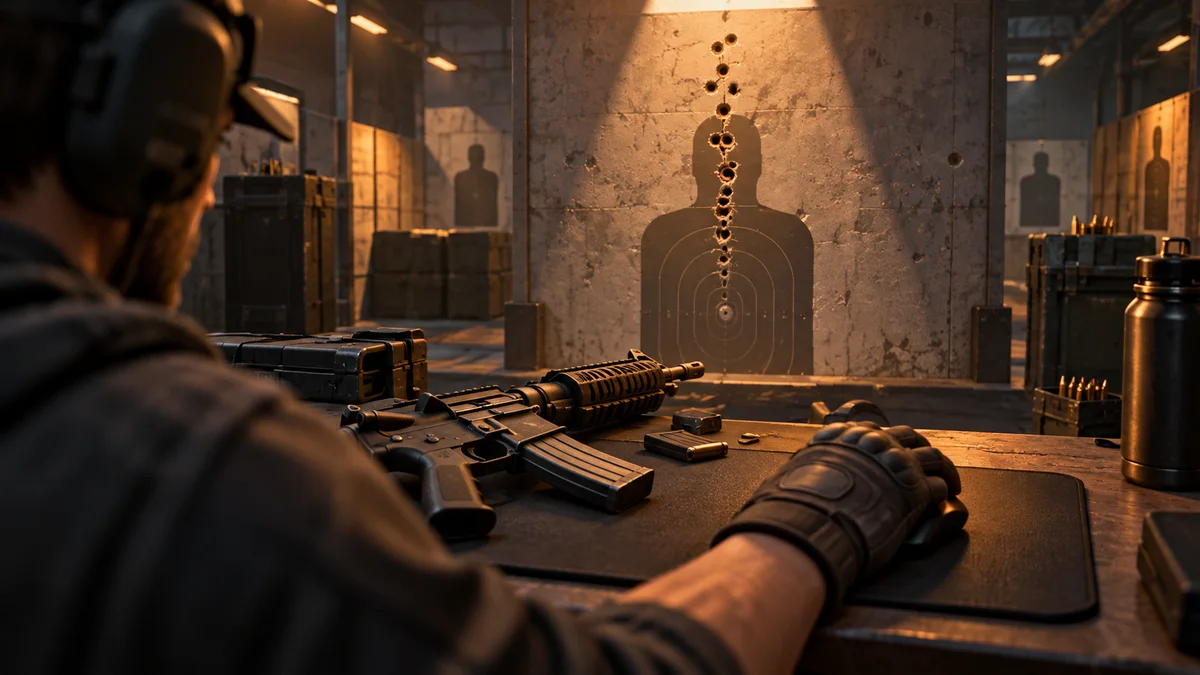
Keep the first session controlled
- Choose the rifle you buy most: the AK-47 or your M4. Keep sensitivity, stance and distance the same.
- Fire a short uncompensated group at a wall and look at its direction. Let the weapon recover before repeating.
- Repeat with compensation. Start with five shots and extend only when that group is stable.
- Test on a player-sized target with normal spread. A no-spread mode shows the pattern but makes the test easier than a match.
- Add a strafe, a full stop and the same group. Slow down if the stop and the shot blur together.
Recoil Master by uLLeticaL gives you a ghosthair to follow for rifles and SMGs, several shooting ranges, toggles for infinite ammo and no spread, and a Bullet Time slow motion that starts when you spray (press E to stop it). Learn with the help on, then switch it off for the check.
Measure ten attempts, not one pretty pattern
Pick a visible target box and count how many of five bullets land inside it over ten attempts, with rifle, box, stance and distance unchanged. Example: 34 of 50 inside is 68%; 40 of 50 is 80%. That is progress on this drill, not 80% accuracy in matches. Repeat with normal spread on another day before you make it harder.
Do not compare a crouched close run with a standing distant one. Crouching can help a committed fight, but it changes the exercise and makes escaping harder. If you keep getting stuck in crouch sprays, train standing control first.
Match the shot to the fight
- Distant head or narrow gap: tap or short burst, then recover; a brief exposure may allow one shot.
- Exposed target at a comfortable distance: a short controlled spray. Reset if the target reaches cover and you can safely move.
- Close trade happening now: commit to the spray when a pause would lose the trade.
- Two opponents together: finish one and transfer if the second is close. With time and cover, a fresh burst is often better.
There is no universal “reset after bullet ten.” Keep firing when the opponent is about to kill you; when you have cover and have lost the target, a full magazine into empty space only extends your exposure. Reloading costs more since 18 March 2026: CS2 now throws away the rounds left in the magazine and loads a full one from your reserve (Guns, Guides, and Games).
Carry it into real fights
Play a short deathmatch block using bursts at range and sprays in close trades. Judge the choice before the outcome: a sensible burst can lose and an accidental spray can win. Review two deaths in a demo and label each one: aim start, stop timing, compensation or shot choice.
The browser click trainer measures time to click appearing targets; it has no recoil, rifle recovery or CS2 movement. Use the training map selection for those and add the drill to your practice routine.