
Understanding CS2 Trade-Up Contracts in 2026
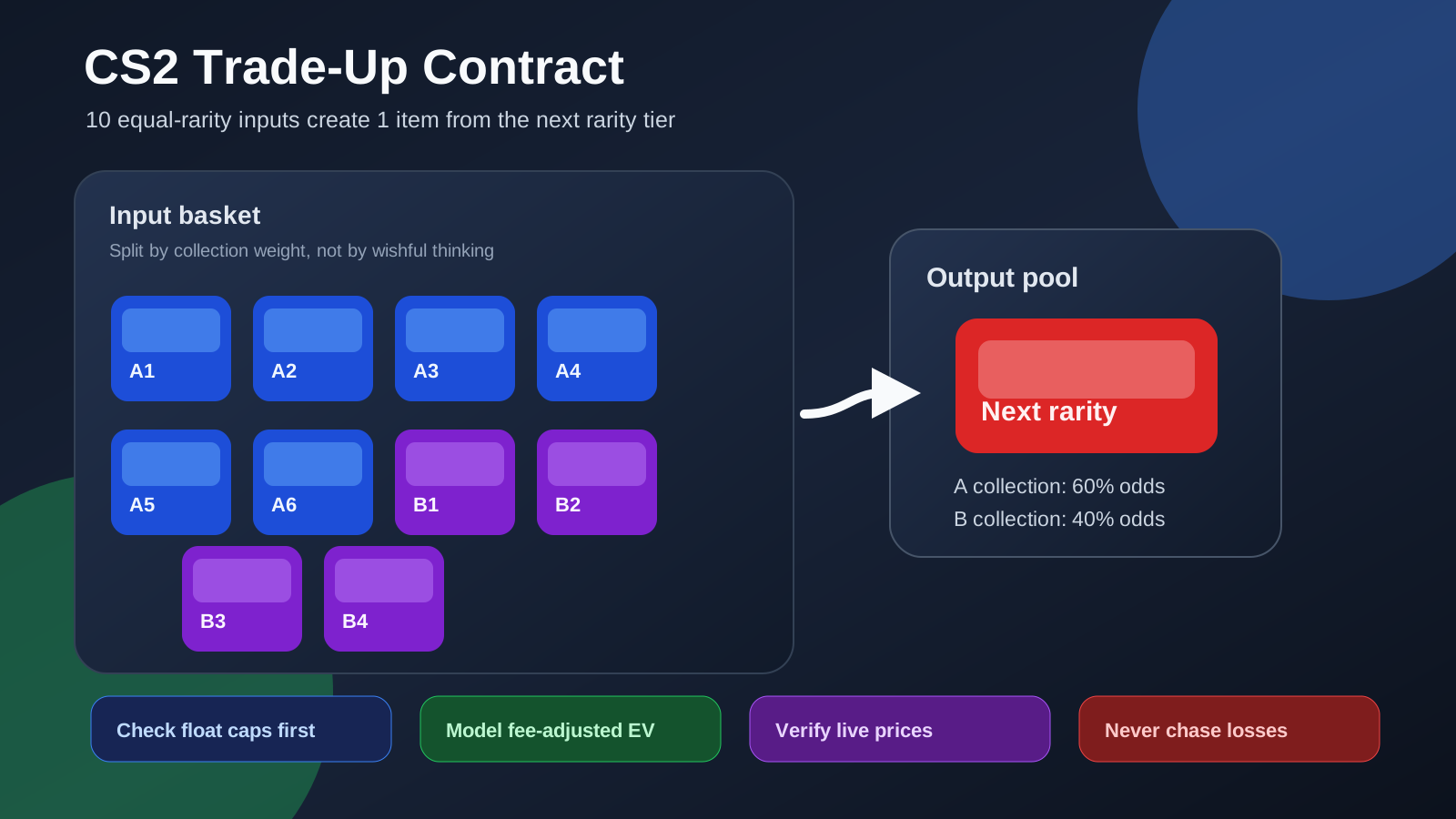
If you are searching for a CS2 trade-up contracts guide 2026, the goal is simple: turn ten skins of the same rarity into one item from the next rarity tier without guessing. The hard part is that profit depends on collection odds, float caps, live prices, fees and whether the output is actually liquid after you hit it.
This guide is built around the workflow real traders use: CS2 trade up calculator, CS2 trade up float formula, EV-based CS2 trade ups, trade-up odds and expected value. Use it before you buy inputs, not as a promise that any contract will make money.
Model the contract before you buy inputs
Start with the calculator, then validate prices and float ranges. The best trade-up is the one that still makes sense after fees and failed outcomes.

The Mechanics: How Trade-Up Contracts Work
Basic Requirements and Rules
Every successful trade-up contract must meet specific criteria:
- Exactly 10 skins of identical rarity tier (Consumer, Industrial, Mil-Spec, Restricted, Classified, or Covert)
- Matching StatTrak status - you cannot mix StatTrak and non-StatTrak inputs in one contract
- No Souvenir skins - these are excluded from trade-up contracts
- No contraband items - skins like M4A4 | Howl cannot be used
- Collection-based outcomes - results come from collections represented in input skins
Float Value Calculation
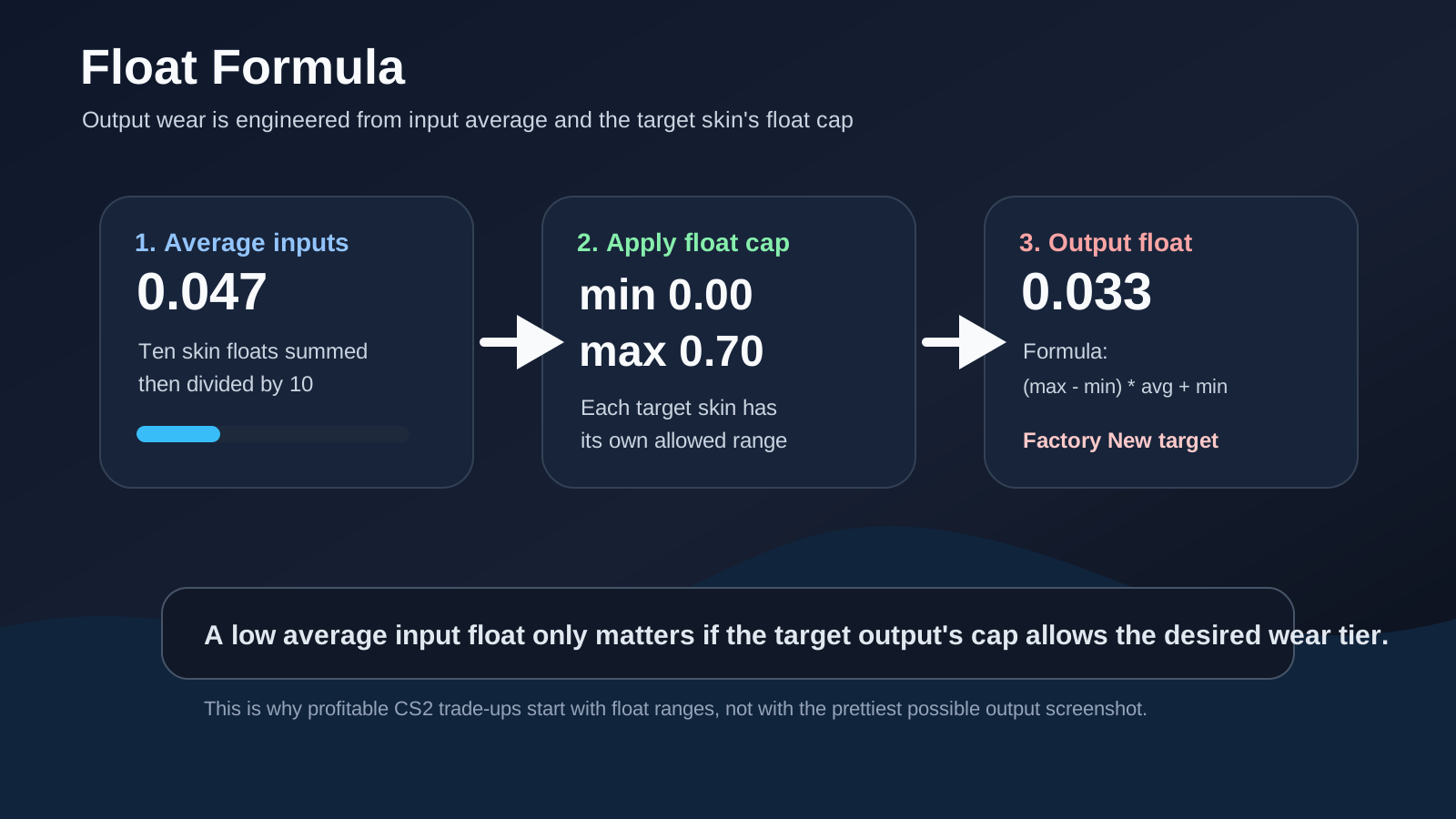
The resulting skin's float value is calculated from your average input float and the possible output skin's own float range. The practical formula is:
Output Float = (Output Max Float - Output Min Float) * Average Input Float + Output Min Float
This is why a low average input float does not automatically mean a Factory New result. A target skin with a narrow or unusual float cap can produce a different wear result than a skin with a 0.00-1.00 range. Good trade-ups are engineered around the float and wear system before the inputs are purchased.
Collection-Based Probability System
Trade-up outcomes are determined by collection representation among input skins. If 7 of your input skins come from Collection A and 3 from Collection B, the collection weighting is 70% toward A and 30% toward B. Within each selected collection, all eligible next-tier outputs share that collection's probability. This is the core reason a CS2 trade-up calculator beats spreadsheet guessing for mixed-collection contracts.
Advanced Float Management Strategies
The Float Optimization Approach
Professional traders often focus on float optimization rather than just profitability. This strategy involves:
- Targeting Low Float Inputs: Using skins with floats under 0.02 to maximize output quality
- Float Range Research: Understanding each skin's minimum and maximum float values
- Condition Targeting: Calculating probability of achieving Factory New (0.00-0.07) output
- Float Value Arbitrage: Exploiting price differences between float ranges
Case Study: AK-47 Printstream Trade-Up
Consider a trade-up targeting the AK-47 | Printstream from the Fracture Collection:
| Input Skin | Collection | Average Cost | Float Target |
|---|---|---|---|
| Glock-18 | Vogue (x5) | Fracture | $8 each | 0.001-0.03 |
| MP9 | Starlight Protector (x5) | Broken Fang | $6 each | 0.001-0.03 |
Analysis workflow: Do not copy this as a fixed price sheet. Recalculate input cost, target odds, target float range, output sell price and marketplace fee on the day you buy. A contract is only attractive when the fee-adjusted expected value remains positive after failed outcomes are included.
EV-Based Trade-Up Strategies for 2026
The Gallery Case Revolution
The October 2024 Gallery Case introduction created new trade-up routes worth checking with live prices. Example research paths include:
- M4A1-S | Vaporwave Trade-Up: Using Restricted skins to target this Classified item
- Glock-18 | Gold Toof Contract: High-value outcome with reasonable input costs
- AK-47 | The Outsiders Route: Premium outcome requiring careful collection management
Legacy Collection Exploitation
Older collections can create interesting EV research paths because discontinued items and supply constraints affect prices and liquidity:
- Cobblestone Collection: AWP | Dragon Lore potential, extremely high risk/reward
- Cache Collection: Multiple valuable outcomes with manageable input costs
- Mirage Collection: AK-47 | Case Hardened possibilities with pattern bonuses
- Overpass Collection: AWP | Pink DDPAT and other targets that need current EV checks
Using Trade-Up Calculators Effectively
Essential Calculator Features
Modern trade-up calculators provide sophisticated analysis tools:
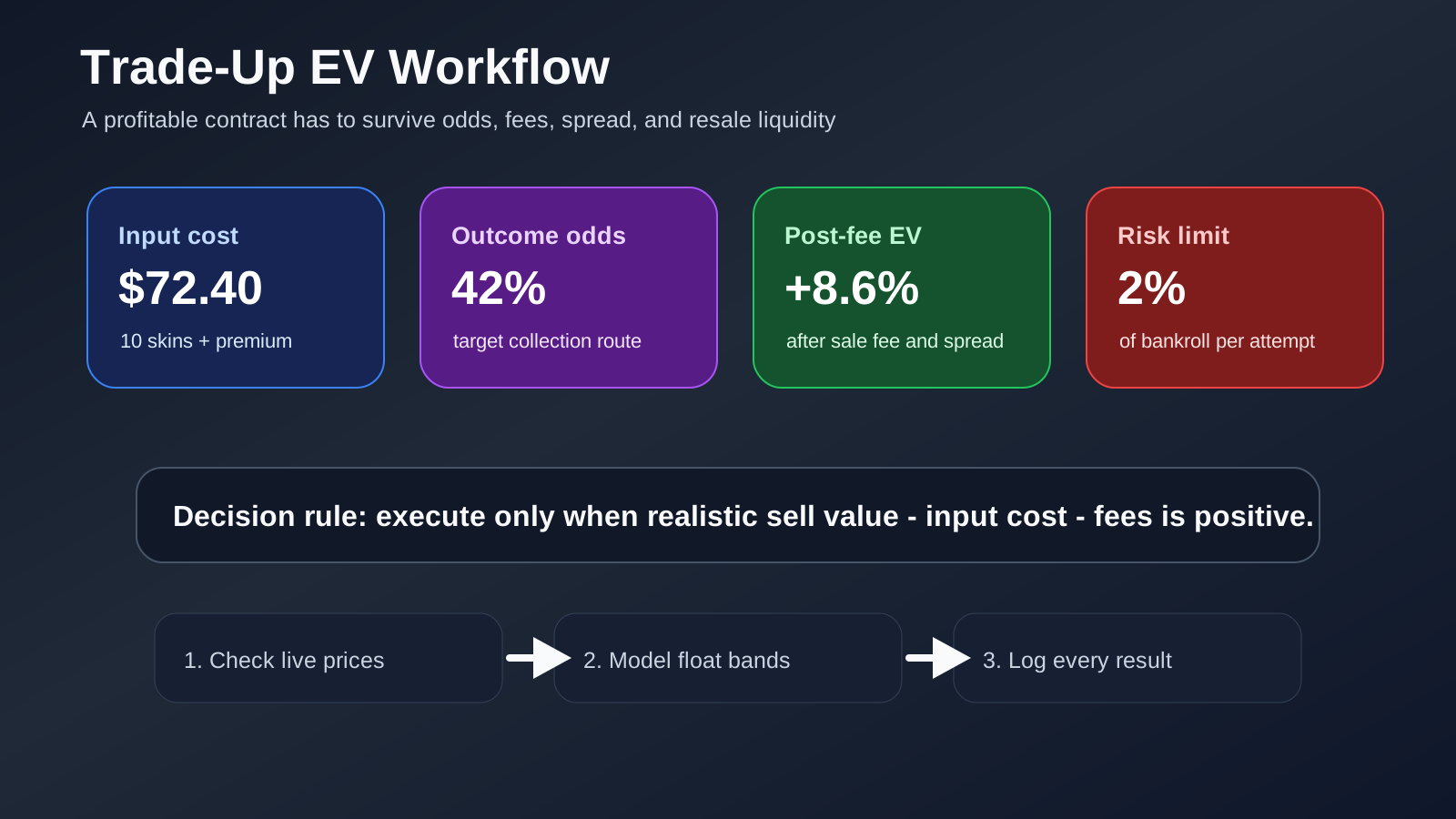
- Expected Value Calculation: weighted probability times realistic output value, minus input cost and fees
- Float Prediction: Estimating output float ranges
- Live Price Integration: Real-time market pricing
- Collection Analysis: Outcome probability breakdown
- Profit Margin Tracking: ROI calculations including fees
Recommended Calculator Workflow
For this site, the best path is internal-first: model the contract on our calculator, compare live market prices, then use broader market guides only when the math survives the first pass.
- Trade Academy trade-up calculator: build the input basket, check possible outputs and model EV before buying.
- Live price table: check whether input prices or output prices moved since the idea was posted.
- CS2 skins database: compare wear tiers, item demand and rough liquidity before locking funds.
- Marketplace fee guide: calculate the sale route before you call a contract profitable.
Ready to test a contract?
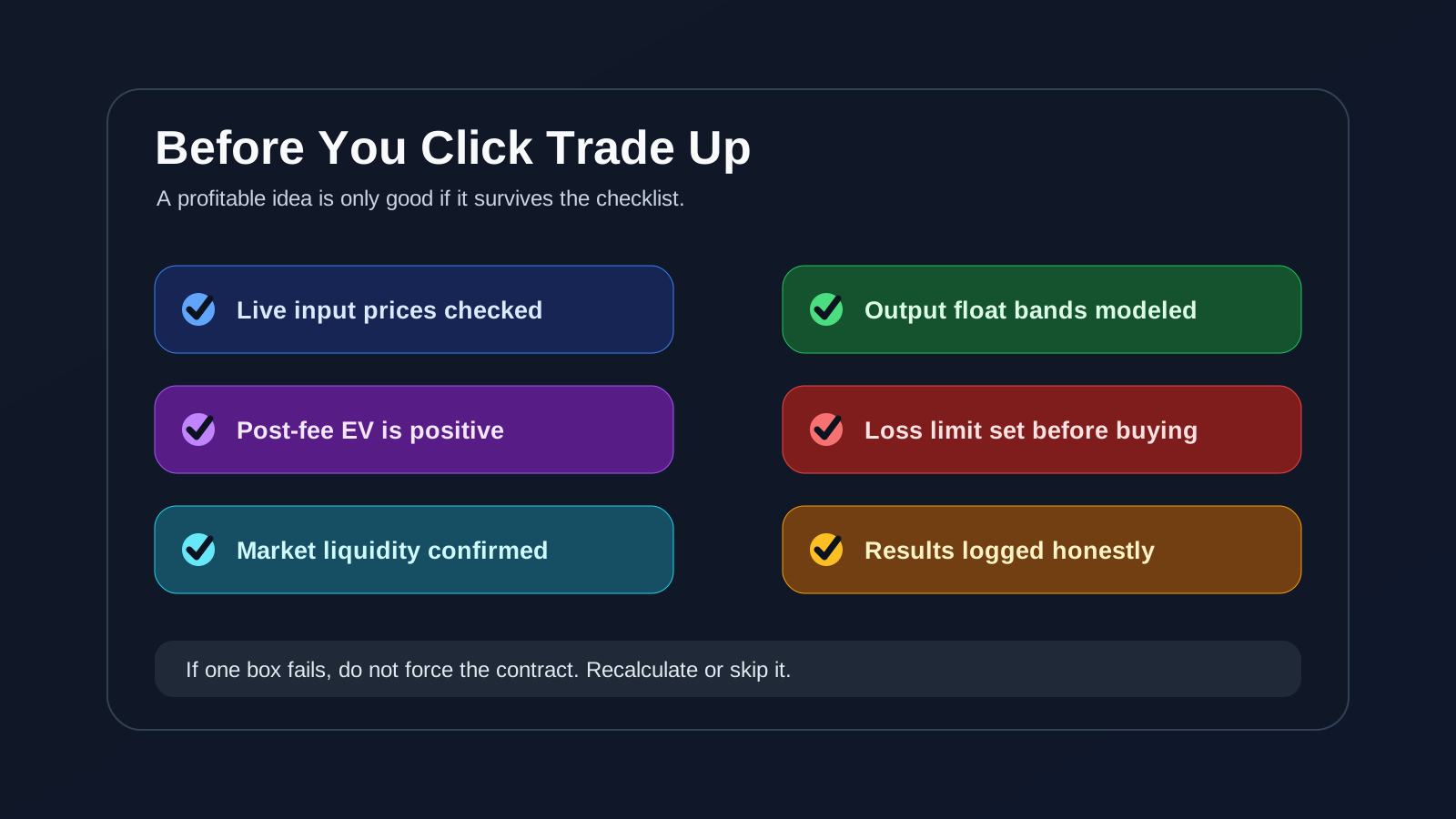
Use the calculator first, then come back to this checklist when the EV looks positive.
Risk Management and Common Mistakes
The Psychology of Trade-Up Gambling
Trade-up contracts can become addictive due to their gambling-like nature. Common psychological traps include:
- Chasing Losses: Attempting to recover losses through increasingly risky contracts
- Ignoring Expected Value: Focusing on best-case outcomes rather than statistical reality
- Overconfidence Bias: Believing in "hot streaks" or personal luck
- Sunk Cost Fallacy: Continuing unprofitable strategies due to previous investments
Technical Mistakes to Avoid
Even experienced traders make costly errors:
- Collection Mixing Errors: Misunderstanding which collections produce which outcomes
- Float Miscalculations: Using high-float inputs for float-sensitive outputs
- Market Timing Issues: Executing contracts during unfavorable market conditions
- StatTrak mixing: Accidentally combining StatTrak and normal skins
- Fee Neglect: Forgetting to account for trading fees and taxes
Advanced Trade-Up Techniques
Multi-Tier Strategy
Sophisticated traders often chain multiple trade-ups together:
- Industrial to Mil-Spec: Convert cheap items to tradeable assets
- Mil-Spec to Restricted: Target liquid skins with good resale value
- Restricted to Classified: Aim for high-value outcomes or collection pieces
- Classified to Covert: Final tier with maximum risk and reward potential
Seasonal and Event-Based Trading
Market conditions significantly impact trade-up profitability:
- Major Tournament Periods: Increased skin demand affects input and output pricing
- Steam Sales: Community Market activity spikes during seasonal sales
- New Case Releases: Temporary market disruption creates opportunities
- Operation Releases: New collections and items affect existing contracts
2026 Example Workflows: How to Think About Trade-Ups
Bankroll-Safe EV Test
A responsible 2026 trade-up test should look less like a highlight clip and more like a controlled sample:
- Started with a capped test budget, not the full trading bankroll
- Executed 50 carefully calculated Industrial to Mil-Spec contracts
- Converted successful outcomes into 10 Mil-Spec to Restricted contracts
- Used resulting items for 2 high-value Restricted to Classified contracts
- Stopped when the post-fee EV turned negative or the target output became illiquid
Key success factors: calculator use, float management, market timing, capped position sizing and honest logging of failed contracts.
The Float Farm Operation
Another successful strategy involved focusing purely on float value optimization:
- Target: Factory New output from a collection with liquid demand
- Strategy: Acquire 10 ultra-low float Restricted skins (0.001-0.005 range)
- Investment: premium input cost only if the output overpay is real
- Outcome: compare the low-float premium against normal wear-tier price
- Profit test: sell-side value must beat input cost, fees and the opportunity cost of holding slow inventory
The Economics of Trade-Up Contracts
Market Efficiency Theory
Traditional economic theory suggests that profitable trade-up opportunities should be rare in an efficient market. However, CS2's complex probability system and information asymmetries create persistent inefficiencies:
- Information Gaps: Many players don't understand collection mechanics
- Float Value Ignorance: Casual traders undervalue float considerations
- Calculation Complexity: Manual probability calculations deter many participants
- Risk Aversion: Conservative players avoid profitable but risky contracts
Market Impact Analysis
Successful trade-up campaigns can significantly impact skin pricing:
- Input Price Inflation: Popular trade-up targets see increased demand
- Output Price Deflation: Successful contracts increase supply of outcomes
- Collection Dynamics: Entire collections can be affected by single popular contracts
- Ripple Effects: Secondary markets respond to primary trade-up activity
Future of Trade-Up Contracts
Technological Evolution
Several developments could reshape trade-up trading:
- AI-Powered Calculators: Machine learning algorithms identifying optimal contracts
- Automated Trading: Bots executing predetermined trade-up strategies
- Blockchain Integration: Transparent probability verification systems
- Enhanced Analytics: Real-time market analysis and opportunity identification
Regulatory Considerations
As trade-up values increase, potential regulatory attention grows:
- Gambling Classification: Some jurisdictions may classify trade-ups as gambling
- Tax Implications: Profitable contracts may trigger tax obligations
- Consumer Protection: Regulations requiring probability disclosure
- Platform Liability: Increased scrutiny of trading platforms and tools
Conclusion: Mastering the Art of Trade-Up Contracts
Trade-up contracts represent one of the most intellectually challenging and potentially rewarding aspects of CS2 trading. Success requires a unique combination of mathematical analysis, market knowledge, risk management, and psychological discipline. The most successful practitioners treat trade-ups not as gambling, but as a form of complex financial engineering.
Key principles for trade-up success include:
- Always calculate expected value before executing contracts
- Understand collection mechanics and probability distributions
- Implement proper float management strategies
- Maintain strict risk management discipline
- Stay informed about market conditions and timing
- Use sophisticated calculator tools for analysis
- Document and analyze all results for continuous improvement
As the CS2 economy continues to mature and evolve, trade-up contracts will likely become increasingly sophisticated. Those who master the math early will be better positioned than players chasing screenshots. In trade-ups, knowledge and discipline beat luck and emotion.
Official rule source
Contract rules were checked against Valve?s October 22, 2025 Counter-Strike 2 update notes, including the five-Covert knife and glove contract rules. Recheck official notes after major game updates.
Frequently asked questions
How many skins do I need for a CS2 trade-up contract?
You need exactly 10 skins of the same rarity tier. StatTrak and non-StatTrak items cannot be mixed, and Souvenir items are excluded.
What is the CS2 trade-up float formula?
The practical formula is: Output Float = (Output Max Float - Output Min Float) * Average Input Float + Output Min Float.
Are CS2 trade-up contracts profitable in 2026?
Some can be, but only after live prices, output odds, float caps, marketplace fees and failed outcomes are included. Most copied contracts stop being profitable once input prices rise.
What is the safest way to test a trade-up?
Use the trade-up calculator first, cap each attempt to a small percentage of your bankroll, and record every result instead of chasing losses.