
CS2 Premier rank is the main visible ranked grind in Counter-Strike 2. Instead of the old hidden feeling of "am I close to ranking up?", Premier gives you a public CS Rating number, color tiers, leaderboards and a map veto before the match starts.
This 2026 guide explains how CS2 Premier rating works, what the rating colors mean, how Premier differs from Competitive, what changed in Premier Season Four, and how to build a practical routine for ranking up without burning your account rating in tilt queues.
Before your next Premier session
Most rating problems are not mysterious Elo problems. They are settings, network, aim, comms, utility or economy problems showing up every match.
Quick Answer: How CS2 Premier Rank Works
Premier uses a visible CS Rating number. You receive a rating after placement, then that number moves after each Premier match. The game shows projected rating gain and loss before the match, so you know what is at stake before pistol round.
| Premier element | What it means | Why it matters |
|---|---|---|
| CS Rating | Visible number such as 12,800 or 19,400 | Your main Premier rank and leaderboard measure. |
| Color tier | Grey, blue, purple, pink, red or gold | Fast visual band for rating range. |
| Placement | Initial calibration after required Premier wins | Early matches move rating confidence quickly. |
| Veto | Teams remove maps until one remains | Map depth matters more than one-map comfort. |
| Season reset | Rating and pool can adjust at season starts | You may need fresh calibration or map prep. |
Premier vs Competitive in CS2
CS2 has two different ranked experiences, and confusing them is one of the easiest ways to misunderstand your progress.
- Premier: One global-style CS Rating across the active duty pool. You play a veto, then compete on the remaining map. This is the mode most players mean when they say "CS2 Elo" or "Premier rank".
- Competitive: Traditional skill groups are separate per map. You can use it to learn Anubis, Nuke or Overpass without risking your Premier rating.
The best use is simple: grind Premier when you are ready to play the pool, and use Competitive or practice servers when one map is obviously dragging your veto confidence down.
CS2 Premier Rating Colors
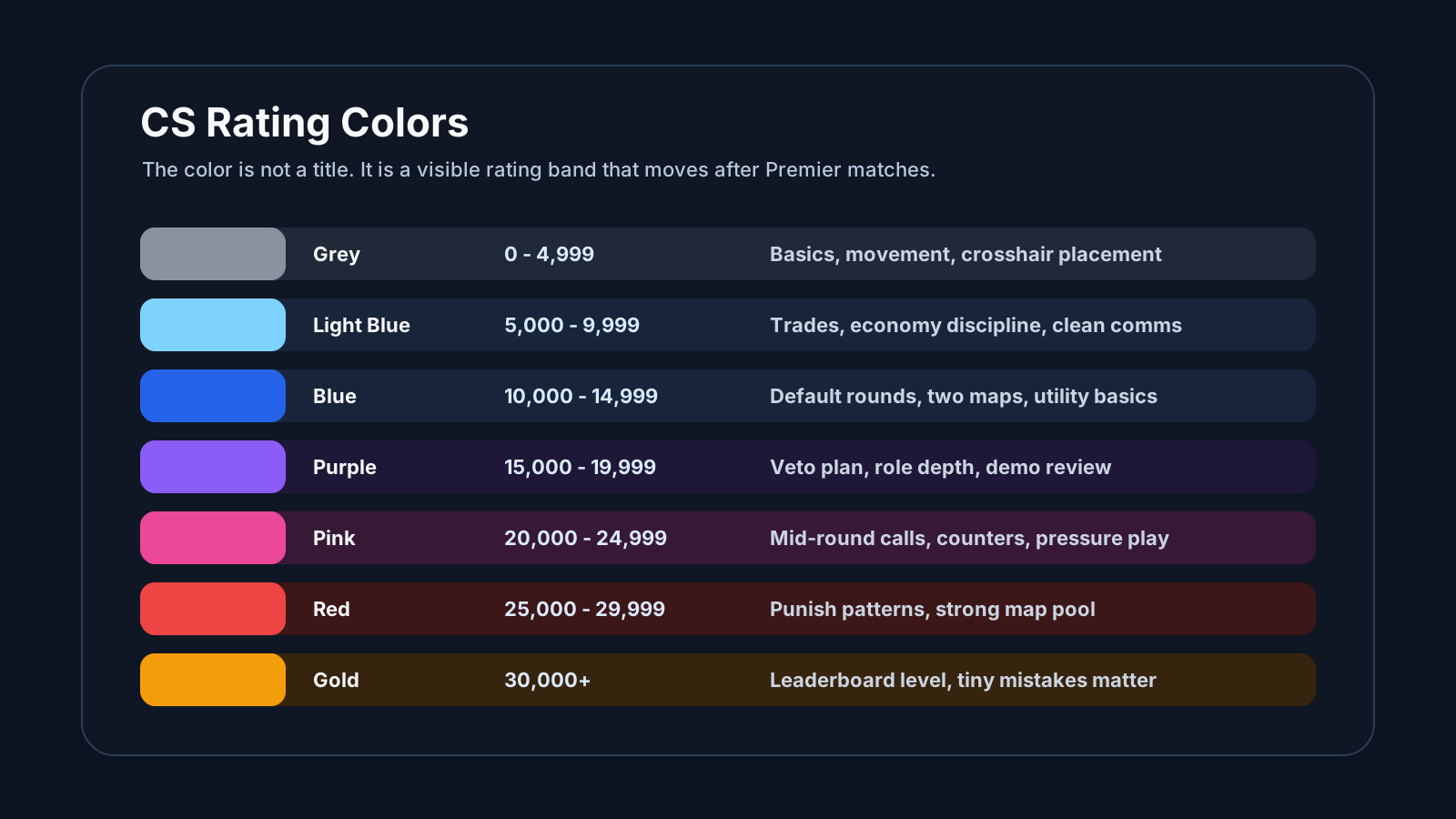
These are the common CS Rating color bands used by the community and visible in Premier discussions. They are not official old-rank equivalents, so treat them as rating ranges, not promises that "Purple equals LEM" or "Red equals Global".
- Grey: 0 - 4,999 - fundamentals, movement, crosshair placement and basic buy discipline.
- Light Blue: 5,000 - 9,999 - trading, basic utility, safer peeking and cleaner communication.
- Blue: 10,000 - 14,999 - default rounds, two to three maps and fewer solo mistakes.
- Purple: 15,000 - 19,999 - consistent roles, stronger veto plan, demo review and utility depth.
- Pink: 20,000 - 24,999 - high-skill lobbies where mid-round calls and anti-strats matter.
- Red: 25,000 - 29,999 - very strong players, punish-heavy games and minimal free mistakes.
- Gold: 30,000+ - leaderboard-level CS Rating where small habits decide matches.
How Points Are Gained and Lost
Players call it "Elo", but Valve does not publish the exact CS Rating formula. The useful part is visible: before the match begins, Premier shows how much rating you can gain for a win and how much you can lose for a loss.
In practice, focus on the factors you can control:
- Win the match: CS Rating is round-objective first. Playing for highlights while losing rounds is bad ranked strategy.
- Respect lobby strength: If your team is favored, a loss can hurt more. If you are the underdog, a win can be more valuable.
- Do not chase kills after the round is lost: Saving a rifle, keeping armor and protecting team economy often wins more rating long term.
- Watch streak behavior: Long win or loss streaks can change the feel of rating swings, so stop before tilt turns two losses into six.
Premier Season Four Map Pool (2026)
Valve's January 2026 Counter-Strike 2 update started Premier Season Four, added Anubis to the Active Duty map pool and removed Train. As of May 10, 2026, the practical Premier pool to prepare is:
| Map | Solo queue focus | Why it affects rating |
|---|---|---|
| Anubis | Mid control and B pressure | Fresh Season Four changes punish outdated pathing and utility. |
| Ancient | Mid, cave and donut spacing | Bad spacing loses trades quickly. |
| Dust II | Long, mid doors and cat timing | Simple map, harsh aim punishment. |
| Inferno | Banana utility and late executes | Economy and utility mistakes snowball. |
| Mirage | Mid default and A executes | Most teams know basics, so details matter. |
| Nuke | Outside control and rotations | Weak comms become free rounds for opponents. |
| Overpass | Connector, bathrooms and B retakes | Map control collapses without clear calls. |
Because the pool can change with Valve updates, use the official client as the final source before a grind session. For the Season Four change itself, Valve's Steam update notes are the best reference.
How to Think About Map Veto
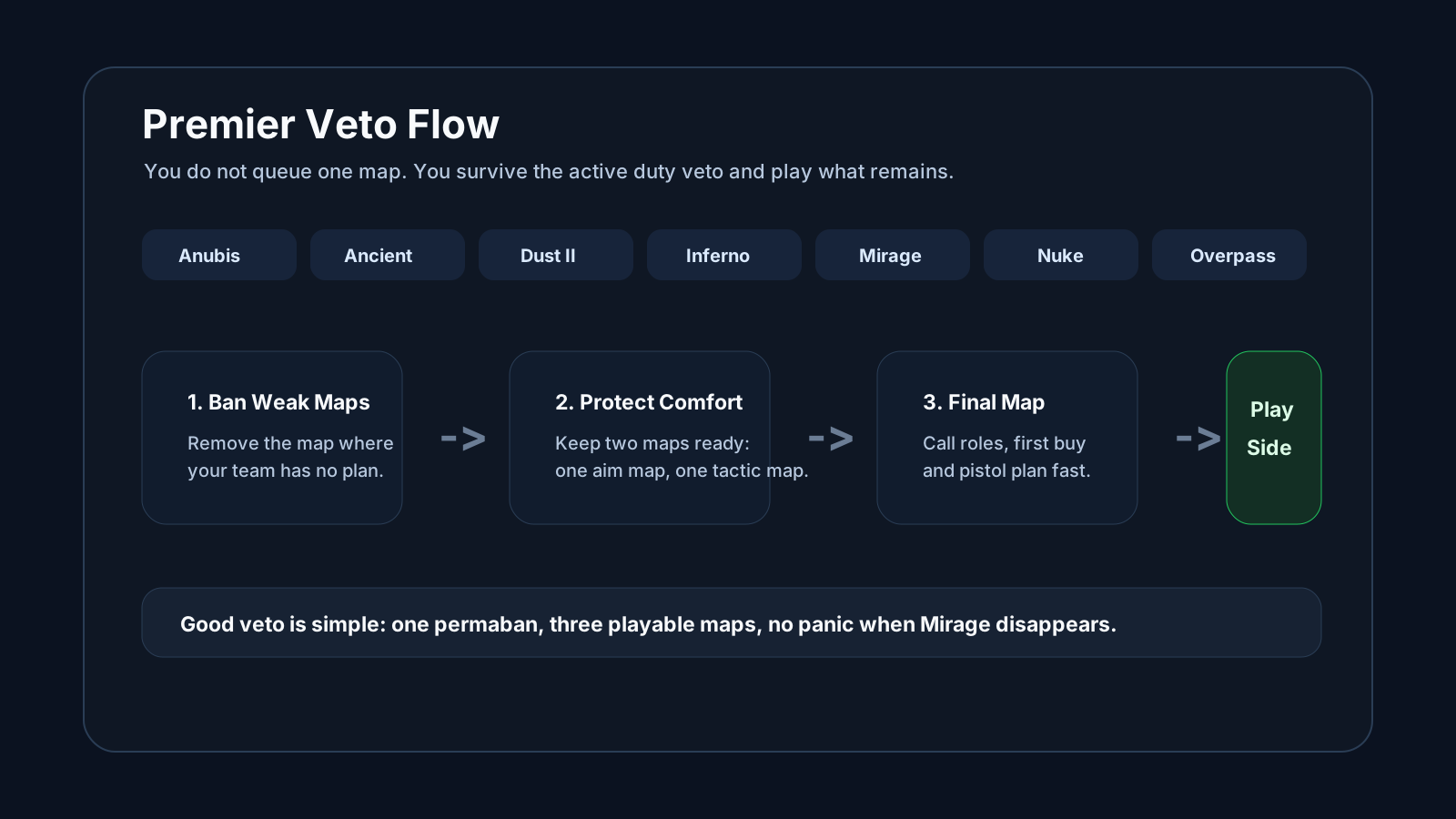
You do not need to master all seven maps equally before playing Premier, but you do need a veto plan that survives normal bans. A practical solo or duo queue setup looks like this:
- One permaban: The map where you have no useful calls, no CT spots and no T default.
- Three comfort maps: Maps where you know one CT role, one T default, two useful smokes and one pistol plan.
- Two acceptable maps: You are not excited to play them, but you can survive with safe spacing and good comms.
- One learning map: Use Competitive, offline practice or workshop tools before letting it decide Premier rating.
If your team has no plan, keep the call simple: "slow default first gun round", "save after plant if retake is dead", "trade mid together". Premier lobbies fall apart when five people try five different plans.
How to Rank Up in CS2 Premier
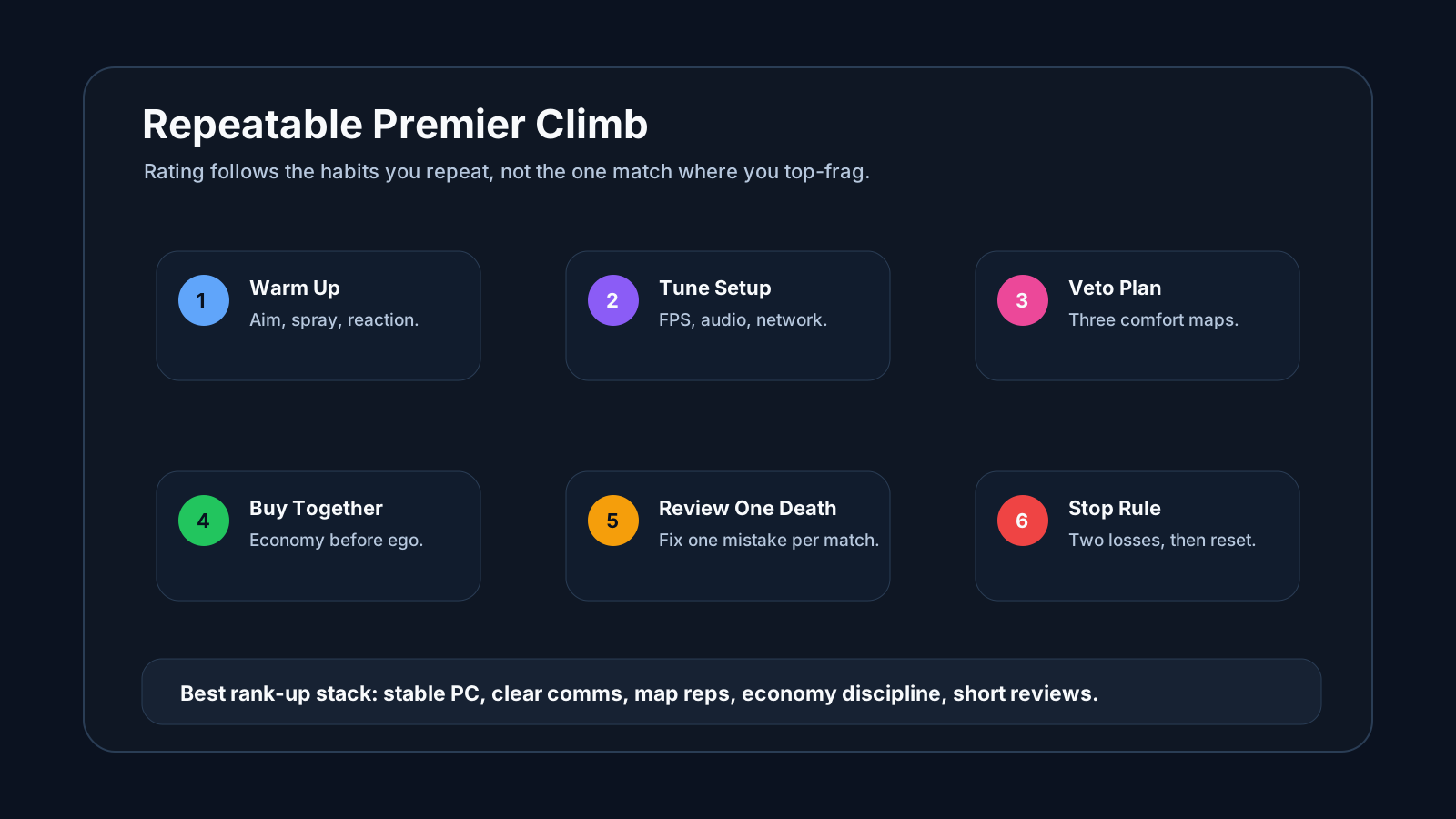
The best Premier routine is not glamorous. It removes avoidable losses. That means stable settings, a warmup you actually repeat, one map skill to improve, and a clean stop rule.
1. Fix Performance Before Blaming Rating
If CS2 feels delayed, blurry or inconsistent, solve that first. Use the CS2 settings guide for FPS, visibility and latency, then check the network guide if the problem appears only online.
2. Warm Up for the Role You Will Play
A B anchor does not need the same warmup as a first-entry rifler. Use CS2 training maps for recoil, prefires and utility, then play one deathmatch with your Premier role in mind. If your aim setup feels unstable, tune it with the mouse and eDPI guide.
3. Learn Economy Calls
Many 10K-18K Premier games are thrown in freeze time. Someone forces alone, someone saves when the team buys, or nobody counts enemy money. Read the CS2 economy guide and start making simple calls: full save, half buy, drop request, kit count, AWP save.
4. Improve Utility in Small Batches
Do not try to learn 50 lineups in one evening. Pick one active duty map and learn two smokes, two flashes and one molotov that actually appear in your games. The grenade guide is the better next page if your team keeps entering sites dry.
5. Use a Two-Loss Stop Rule
Premier punishes emotional queueing. After two losses, stop the ranked queue and switch to demo review, utility practice or aim work. The goal is not to "end on a win"; the goal is to protect your decision quality.
Build your Premier improvement stack
Use these pages as the next steps depending on what actually cost you rounds.
Common Premier Rank Mistakes
- One-map comfort: If you only know Mirage, the veto will eventually expose you.
- Playing for scoreboard: Exit kills and baited saves can look fine while losing the match.
- Changing settings after every loss: Fix measurable problems, not emotions.
- Dry peeking every rifle round: Utility and trading are cheaper than donating opening deaths.
- Ignoring team economy: A solo AK buy can cost two future rounds.
- No review loop: If every loss is "bad teammates", you are not collecting useful feedback.
Frequently Asked Questions
Does personal performance affect CS2 Premier rating?
Valve does not publish the exact formula. The safest assumption is that winning the match is the main factor. Kills help only when they convert into rounds, trades, plants, defuses and saves that improve the team result.
Why did I lose more rating than I gained?
The match may have expected your team to win, your recent results may have shifted rating confidence, or the opponent/team rating balance may have made the loss more expensive. The projected gain/loss shown before the match is the number to watch.
What happened in Premier Season Four?
Valve started Premier Season Four in January 2026. The official update notes added Anubis to the Active Duty map pool and removed Train, which changed Premier veto preparation for the season.
Is Premier harder than Competitive?
Usually yes if you care about all-map consistency. Competitive lets you queue specific maps and build per-map ranks. Premier forces active duty map depth, veto decisions and a single visible rating.
What is the fastest honest way to rank up?
Fix technical issues, learn three active duty maps, communicate useful information, buy with the team and review one mistake after each session. That routine beats playing six tilted games after midnight.